VR Design Unpacked: This Immersion Hack is Too Simple to Work So Well
What the report saysIn Inside XR Design we examine specific examples of great VR design. Today we’re looking at the clever design of Red Matter 2’s ‘grabber tools’ and the many ways that they contribute to immersion…
What the report says
In Inside XR Design we examine specific examples of great VR design. Today we’re looking at the clever design of Red Matter 2’s ‘grabber tools’ and the many ways that they contribute to immersion.Editor’s Note: Red Matter 2 was released four years ago this month! Despite its age, it remains one of the best looking and most immersive games on Quest. In celebration of the game’s release anniversary, we’re bumping this episode back up to our front page to highlight the game’s use of ‘grabber tools’, a clever design choice that unexpectedly boosts Red Matter 2’s immersion and interactivity.You can find the complete video below, or continue reading for an adapted text version.IntroToday we’re going to talk about Red Matter 2 (2022), an adventure puzzle game set in a retro-future sci-fi world.
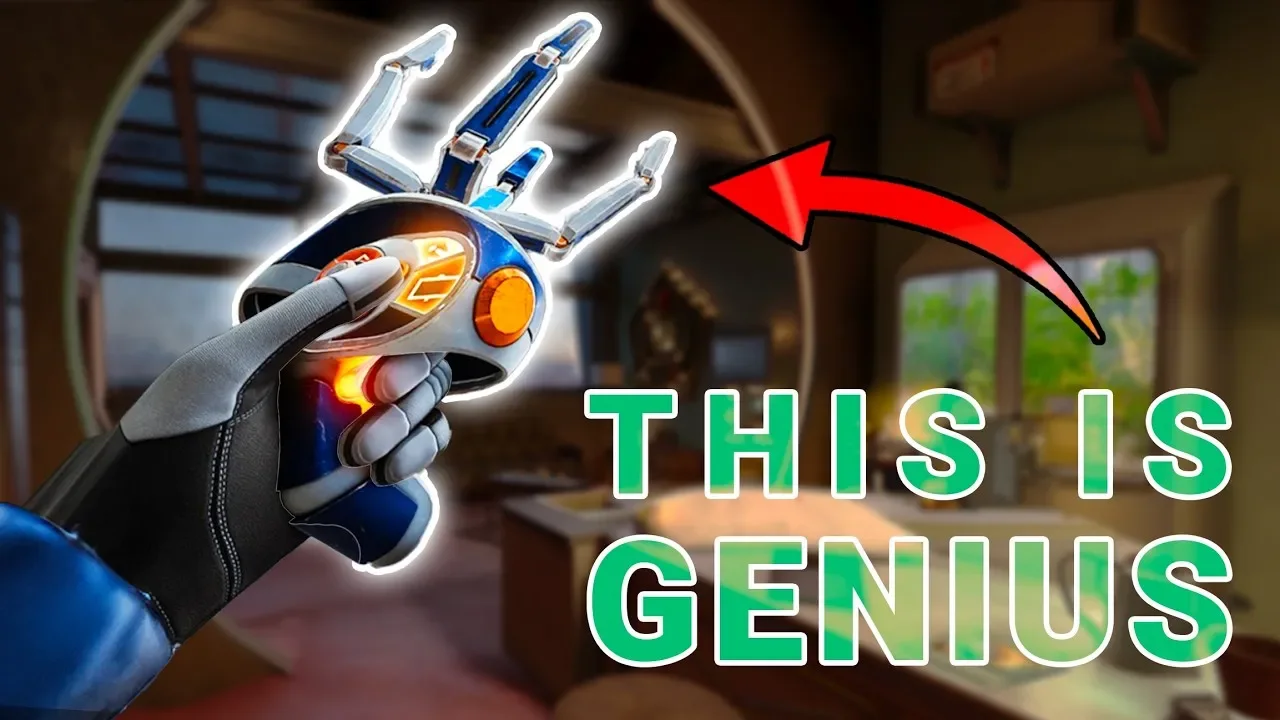
The game is full of great VR design, but those paying close attention will know that some of its innovations were actually pioneered all the way back in 2018 with the release of the original Red Matter. But hey, that’s why we’re making this video series—there’s incredible VR design out there that everyone can learn from.We’re going to look at Red Matter 2’s ingenious grabber tools, and the surprising number of ways they contribute to immersion.What You See is What You GetAt first glance, the grabber tools in Red Matter 2 might just look like sci-fi set-dressing, but they are so much more than that.At a basic level, the grabber tools take on the shape of the user’s controller.
If you’re playing on Quest, Index, or PSVR 2, you’ll see a custom grabber tool that matches the shape of your specific controller.First and foremost, this means that players’ in-game hand pose matches their actual hand pose and the feeling of holding something in their hands. The shape you see in-game even matches the center of gravity as you feel it in your real hand.Compare that to most VR games which show an open hand pose and nothing in your hand by default… that creates a disconnect between what you see in VR and what you actually feel in your hand.And of course because you’re holding a tool that looks just like your controller, you can look down to see all the buttons and what they do.I don’t know about you, but I’ve been using VR for years now, and I still couldn’t reliably tell you off the top of my head which button is the Y button on a VR controller.

Key details
Is it on the left or right controller? Top or bottom button? Take your own guess in the comments and then let us know if you got it right!Being able to look down and reference the buttons—and which ones your finger is touching at any given moment—means players can always get an instant reminder of the controls without breaking immersion by opening a game menu or peeking out of their headset to see which button is where.This is what’s called a diegetic interface—that’s an interface that’s contextualized within the game world, instead of some kind of floating text box that isn’t actually supposed to exist as part of the game’s narrative.In fact, you’ll notice that there’s absolutely no on-screen interface in the footage you see from Red Matter 2.
And that’s not because I had access to some special debug mode for filming. It’s by design.When I spoke with Red Matter 2 Game Director Norman Schaar, he told me, “I personally detest UI—quite passionately, in fact! In my mind, the best UI is no UI at all.”Schaar also told me that a goal of Red Matter 2’s design is to keep the player immersed at all times.So it’s not surprising that we also see that the grabber tools used as a literal interface within the game, allowing you to physically connect to terminals to gather information.
To the player this feels like a believable way that someone would interact with the game’s world—under the surface we’re actually just looking at a clever and immersive way of replacing the ‘press X to interact’ mechanics that are common in flat games.The game’s grabber tools do even more for immersion than just replicating the feel of a controller in your hand or acting as a diegetic interface in the game. Crucially, they also replicate the limited interaction fidelity that players actually have in VR.Coarse Hand InputSo let me break this down.
More from the announcement
In most VR games when you look at your hands you see… a human hand. That hand of course is supposed to represent your hand.